Psychedelic Wellness vs Traditional Coaching: Which Is Better For Your Executive Burnout Recovery?
- Wix Partner Support
- Dec 12, 2025
- 4 min read

You're running on empty. The promotion you worked so hard for feels hollow. Your team looks to you for leadership, but you can barely lead yourself out of bed some mornings. Sound familiar?
Executive burnout isn't just about being tired: it's about feeling disconnected from your purpose, overwhelmed by responsibility, and trapped in cycles that drain your soul. And if you're an LGBTQ+ executive, you're likely carrying additional weight from navigating authenticity in corporate spaces.
Two emerging approaches promise relief: psychedelic wellness and traditional coaching. But which one actually works for the kind of deep exhaustion you're experiencing?
Let's break it down.
What Is Psychedelic Wellness?
Psychedelic wellness combines legally regulated substances: primarily psilocybin and ketamine: with therapeutic support and integration practices. Think of it as hitting the reset button on your brain's default patterns.

Here's what makes it different: instead of slowly building new habits, psychedelics create what researchers call a "window of neuroplasticity." Your brain becomes temporarily more flexible, allowing rapid shifts in perspective and emotional processing.
Beckley Retreats reports that 60% of their guests present with burnout symptoms, and they've seen a threefold increase in C-suite attendees since 2021. That's not a coincidence: executives are finding traditional approaches aren't cutting through the depth of their exhaustion.
Recent research shows that psilocybin-assisted therapy combined with mindfulness training produced significantly greater reductions in depression and burnout compared to mindfulness training alone. Participants report increased energy, improved connectedness, and relief from the emotional depletion that makes everything feel pointless.
The benefits you might experience:
Rapid perspective shifts (weeks, not months)
Reconnection with your sense of purpose
Relief from emotional numbness
Increased creativity and problem-solving
Deeper self-compassion
But here's the reality check: Psychedelics address your internal mental state, but they can't fix toxic workplace conditions, unfair pay, or systemic organizational problems. If your burnout stems from genuinely unsustainable external conditions, no amount of inner work will solve that.
What Is Traditional Coaching?
Traditional executive coaching works through structured conversations, skill-building, and accountability. Your coach helps you identify limiting beliefs, develop stress management strategies, improve communication, and create sustainable behavioral changes.
It's the methodical approach: like going to the gym for your mindset. You build strength gradually through repeated practice and conscious habit formation.
Good coaching addresses the practical realities of executive life: delegation, boundary-setting, time management, and navigating organizational politics. It's particularly effective when your burnout stems from feeling overwhelmed or under-skilled rather than fundamentally disconnected.
The benefits you might experience:
Improved practical management skills
Better work-life boundaries
Enhanced emotional intelligence
Increased self-awareness
Sustainable habit formation
The timeline reality: Traditional coaching typically requires 6-12 months of regular sessions for substantial change. You're building new neural pathways the slow way: through repetition and reinforcement.
The Direct Comparison
Let's get specific about how these approaches differ:
Speed of results:
Psychedelic wellness: 2-4 weeks for noticeable shifts
Traditional coaching: 3-6 months for substantial change
Time commitment:
Psychedelic wellness: 3-5 intensive days (retreat format)
Traditional coaching: Ongoing 1-2 hours weekly
Cost considerations:
Psychedelic wellness: $5,000-$15,000+ per retreat
Traditional coaching: $5,000-$30,000+ annually
Accessibility:
Psychedelic wellness: Limited by geography and legality
Traditional coaching: Widely available, often covered by corporate benefits

Which Approach Is Right for You?
Choose psychedelic wellness if:
You've tried traditional interventions without sufficient relief. Your burnout involves existential questions about meaning and purpose: you're not just tired, you're questioning why you're doing any of this. You have the time and resources for a structured retreat, and you're in a jurisdiction where it's legally accessible.
This approach works best when your external conditions are actually reasonable, but internal depletion is the primary issue. If you're an LGBTQ+ executive who's been "covering" or hiding parts of yourself, psychedelic experiences often facilitate profound reconnection with authentic identity.
Choose traditional coaching if:
You need to improve specific skills like time management, delegation, or boundary-setting. Your burnout is tied to specific workplace dynamics that need strategic navigation. You prefer gradual change and want to avoid intensive experiences.
Traditional coaching is ideal when you need ongoing, flexible support without taking significant time away from work. It's also the better choice if you're building long-term leadership capability or if your corporate benefits cover it.
For LGBTQ+ executives specifically:
Both approaches can address the unique challenges of managing authenticity in corporate spaces. Psychedelic experiences often facilitate self-acceptance and reduce internalized shame. Traditional coaching helps you develop strategies for navigating workplace dynamics while staying true to yourself.
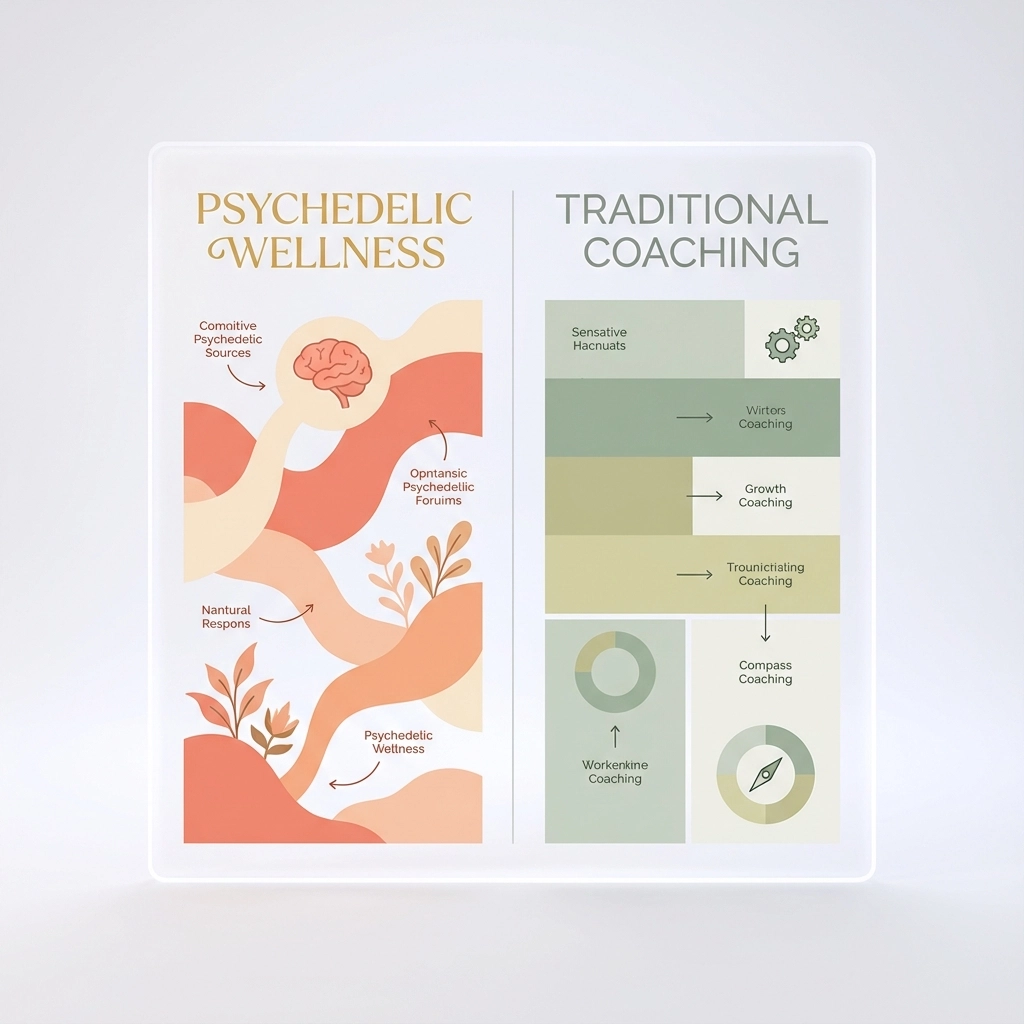
The Integration Approach
Here's what many executives are discovering: the most powerful approach combines both modalities.
Psychedelic wellness creates the "window of neuroplasticity" needed to make coaching insights stick. Traditional coaching provides the practical skills and ongoing support needed to translate profound insights into sustainable change.
The sequence matters. Many find that starting with psychedelic wellness creates breakthrough perspective shifts, followed by traditional coaching to build the skills and systems that support your new way of being.
Think of it this way: psychedelics clear the fog, coaching builds the navigation system.
What About Safety and Sustainability?
Both approaches have strong safety profiles when professionally guided. Psychedelic therapy shows rare adverse events in clinical settings. Traditional coaching carries minimal risks.
The sustainability question is crucial. Psychedelic experiences can create durable benefits, but they require meaningful integration work. Coaching creates sustainable habits, but requires ongoing practice.
Neither approach substitutes for addressing genuinely toxic work environments. If your role, organization, or workload are fundamentally unsustainable, both approaches work best when paired with honest evaluation of whether your situation needs to change.

Your Next Step
Burnout isn't a personal failing: it's a sign that something needs to change. Whether that change happens through rapid perspective shift or gradual skill-building depends on your specific situation, resources, and preferences.
The most important thing? Stop accepting exhaustion as normal. You deserve to feel energized by your work, connected to your purpose, and authentic in your leadership.
Start by asking yourself: What's really driving your burnout? Is it lack of skills, overwhelming external conditions, or disconnection from meaning and purpose? Your answer will point you toward the approach that serves you best.
You don't have to choose between being successful and being yourself. You don't have to choose between professional achievement and personal wellbeing. The right intervention can help you integrate both.
Your burnout recovery isn't just about getting back to where you were: it's about becoming the leader you're meant to be. Whether that journey involves psychedelic insight, coaching support, or both, it starts with the decision that you're worth the investment.
Comments